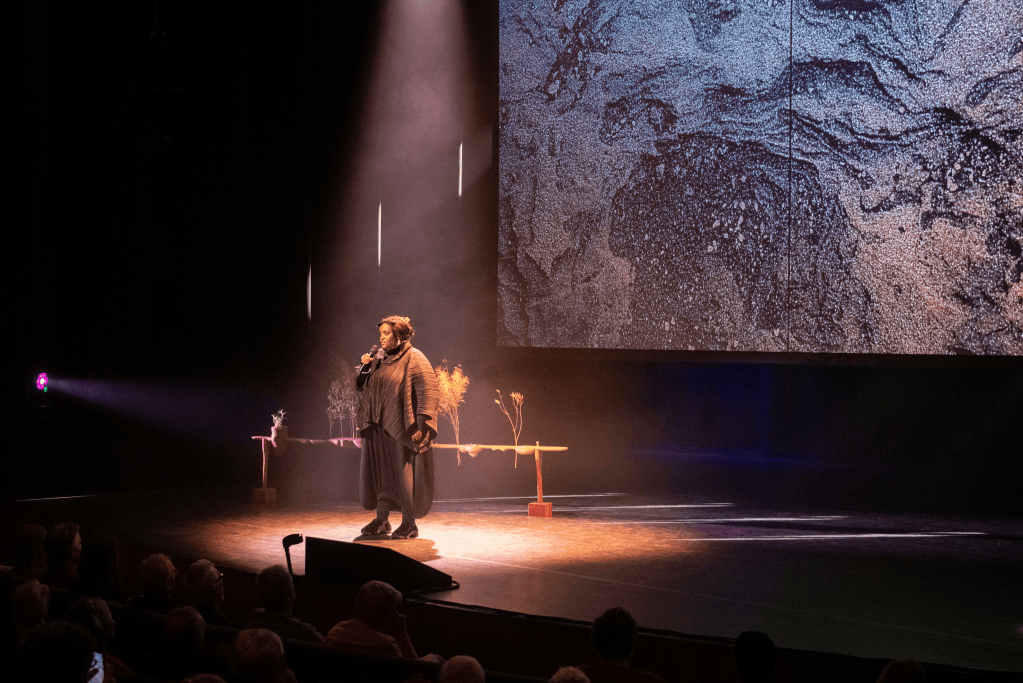
Otobong Nkanga has received the Sikkens Prize 2026, presented by the Sikkens Foundation at Singer Laren in the Netherlands. The ceremony marked the opening of her solo exhibition Humus Blues, and architect Afaina de Jong delivered the Mondrian Lecture 2026. The Artists Newspaper was present for the afternoon and evening.
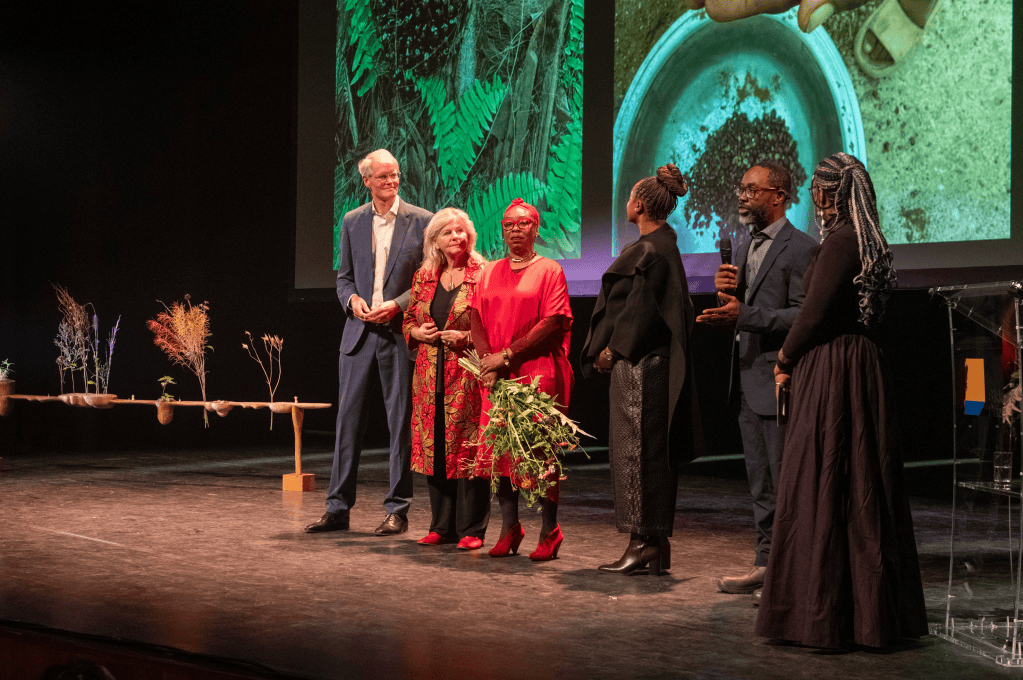
Awarded every two years, the Sikkens Prize honours an artist or collective who is pioneering in the field of colour. Earlier laureates include Donald Judd and Bridget Riley. The prize carries €75,000 and an exhibition at Singer Laren.
Colour as a critical language
The jury report, written by author and board member Rashid Novaire and read aloud at the ceremony, honours Nkanga for using colour “not as an aesthetic choice but as a critical language”, rooted in pigments, minerals and the earth. The jury describes her work as a political act: it addresses extraction and loss, and seeks ways to repair what has been taken from damaged landscapes, while asking viewers to recognise their own entanglement with the world and to approach it with humility.
In the report, pigments and minerals become “active witnesses”. Novaire turns Descartes on its head to capture the role of absence in her work: “I am, therefore I miss”, and loss, he writes, is transformed into imagination. He traces this through Cadence (2024) at MoMA in New York, a monumental tapestry accompanied by the sound of a falling tear; Contained Measures of Shifting States, a performance at Tate Modern in London; and back to her student days at Obafemi Awolowo University in Nigeria, where she sketched Orisha figures in drawing class.
Humus Blues
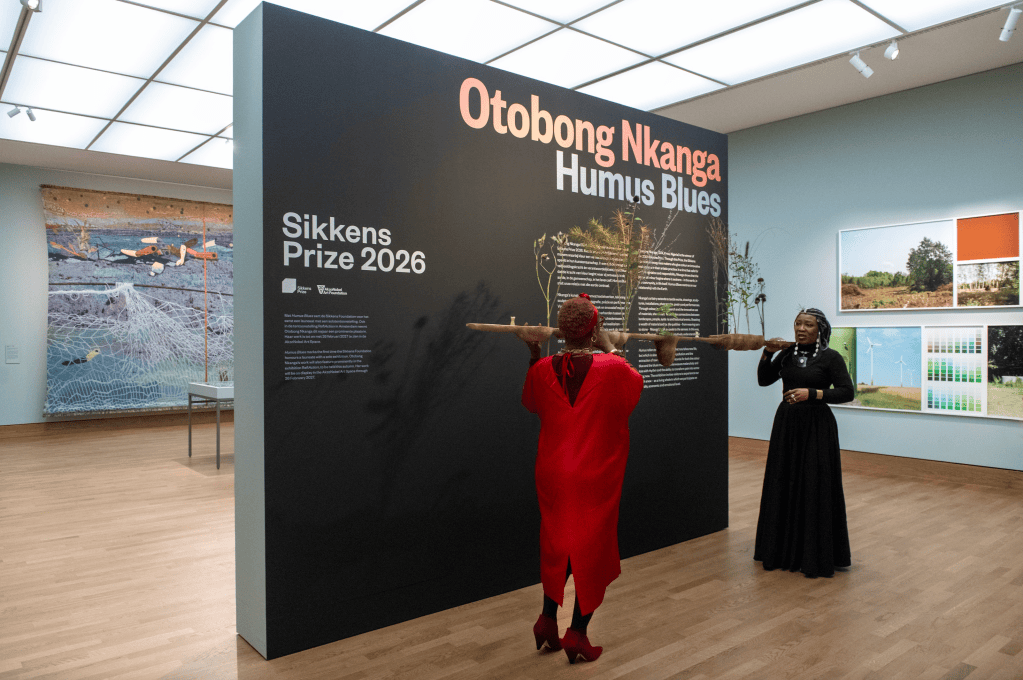
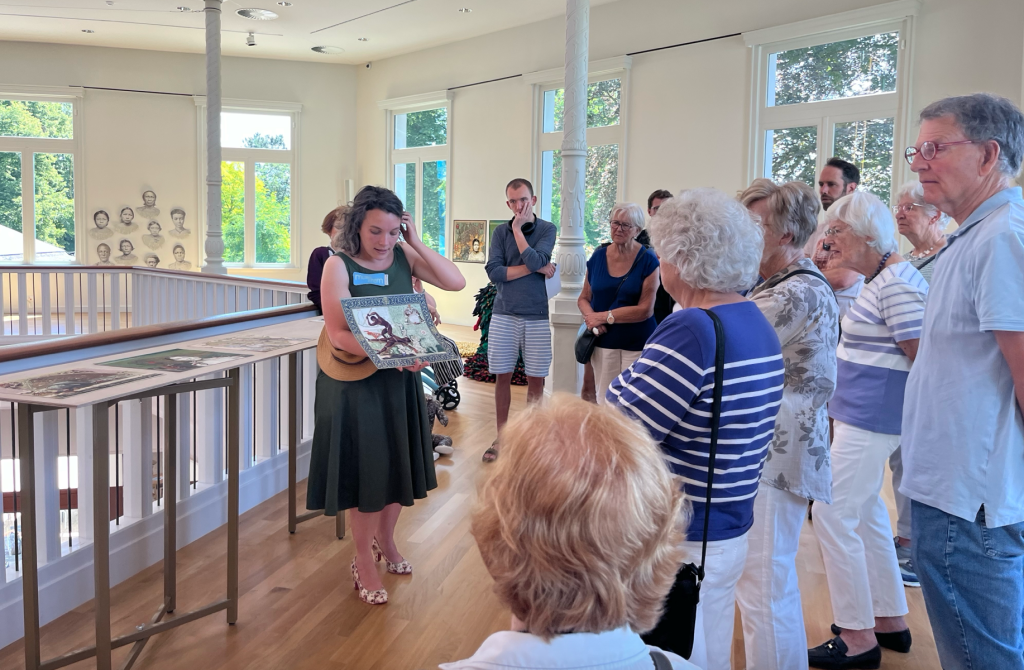
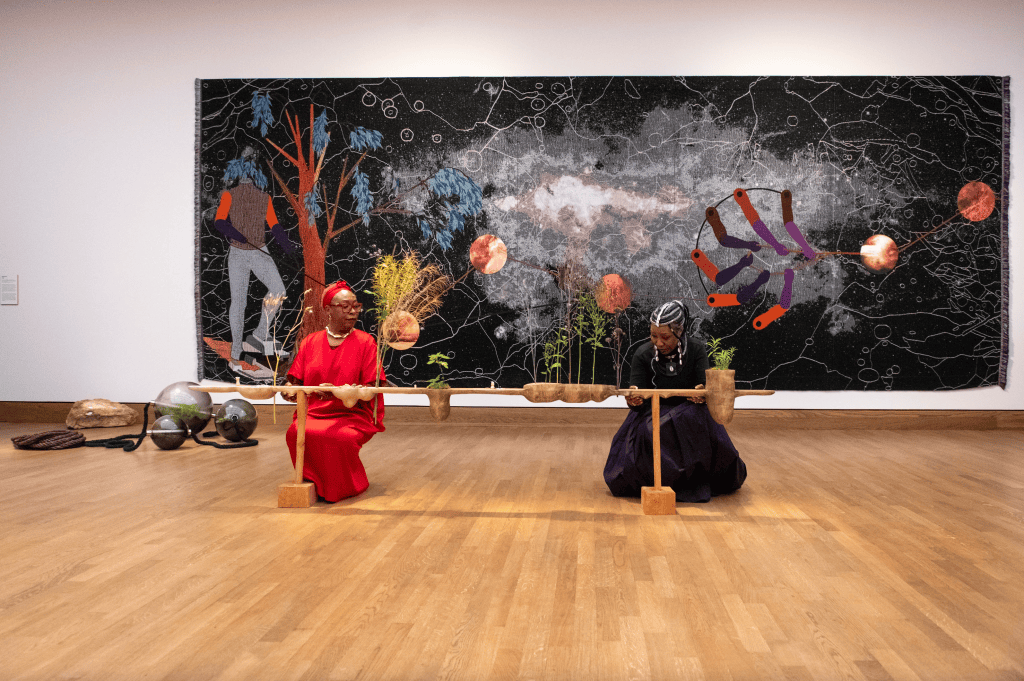
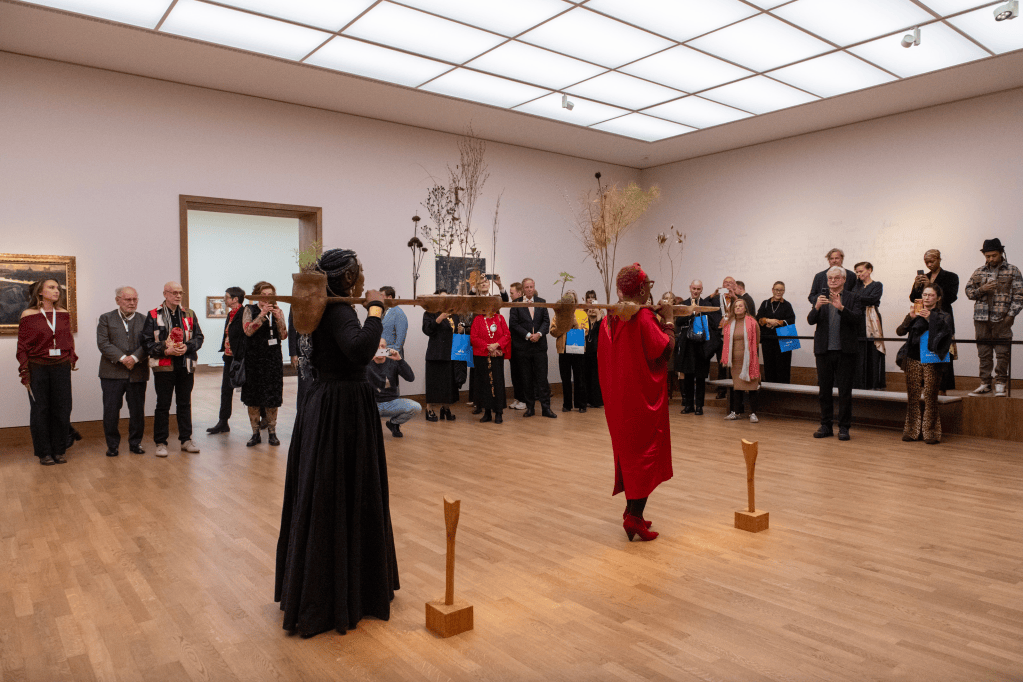
Humus Blues brings together sculptures, textiles, drawings, paintings, photographs and poetry. It remains on view at Singer Laren until the end of February 2027. A further selection of Nkanga’s works can be seen in ReflAction at the AkzoNobel Art Space in Amsterdam.
The prize money: Carved to Flow
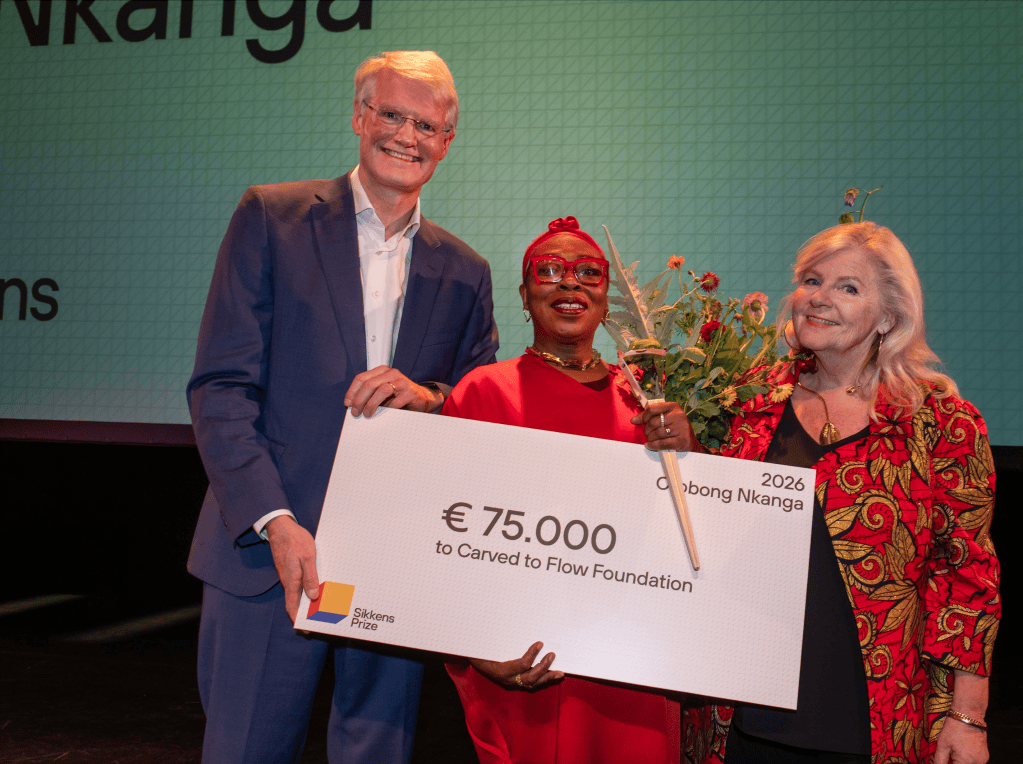
The €75,000 prize was presented to the Carved to Flow Foundation, which Nkanga established in 2018. It grew out of Carved to Flow, a work she conceived in 2017 as a self-sustaining support structure and describes as “an active utopia that began in a dream”. The project was activated during documenta 14: a soapmaking laboratory in Athens produced O8 Black Stone, a soap made from seven oils and butters from the Mediterranean, the Middle East, and North and West Africa, with charcoal, which was then presented and sold in Kassel.
The Foundation, based in Nigeria and Belgium, redistributes the proceeds to locally based, socially engaged initiatives. In Akwa Ibom State in southern Nigeria, where Nkanga’s patrimonial land is located, it is developing an organic farm that supports local knowledge and practices. It also helped found Akwa Ibom, a non-profit exhibition space in Athens established in 2019 and directed by Maya Tounta, named after the same state.
About the artist
Otobong Nkanga was born in Kano, Nigeria, in 1974 and lives and works in Antwerp, Belgium. Her practice spans installation, sculpture, tapestry, drawing, painting, video, photography and performance, and examines the social, political, ecological and material relationships between bodies, territories, minerals and the earth.
She is the 2025 Nasher Prize Laureate of the Nasher Sculpture Center in Dallas and the recipient of the 2025 Zeitz MOCAA Honorary Award. She received the 2026 Finkenwerder Art Prize and the 2015 Yanghyun Prize. In 2026 she presented Soft Offerings to Silenced Voices and to All Who Have Turned to Dust in the Central Pavilion of the 61st Venice Biennale. Her work is held in collections including Tate, London; the Stedelijk Museum Amsterdam; and the Musée d’Art Moderne de Paris.
Read the jury report (Dutch, PDF) · Watch the Nieuwsuur feature · Sikkens Prize
Photos: Janiek Dam, courtesy of the Sikkens Foundation.