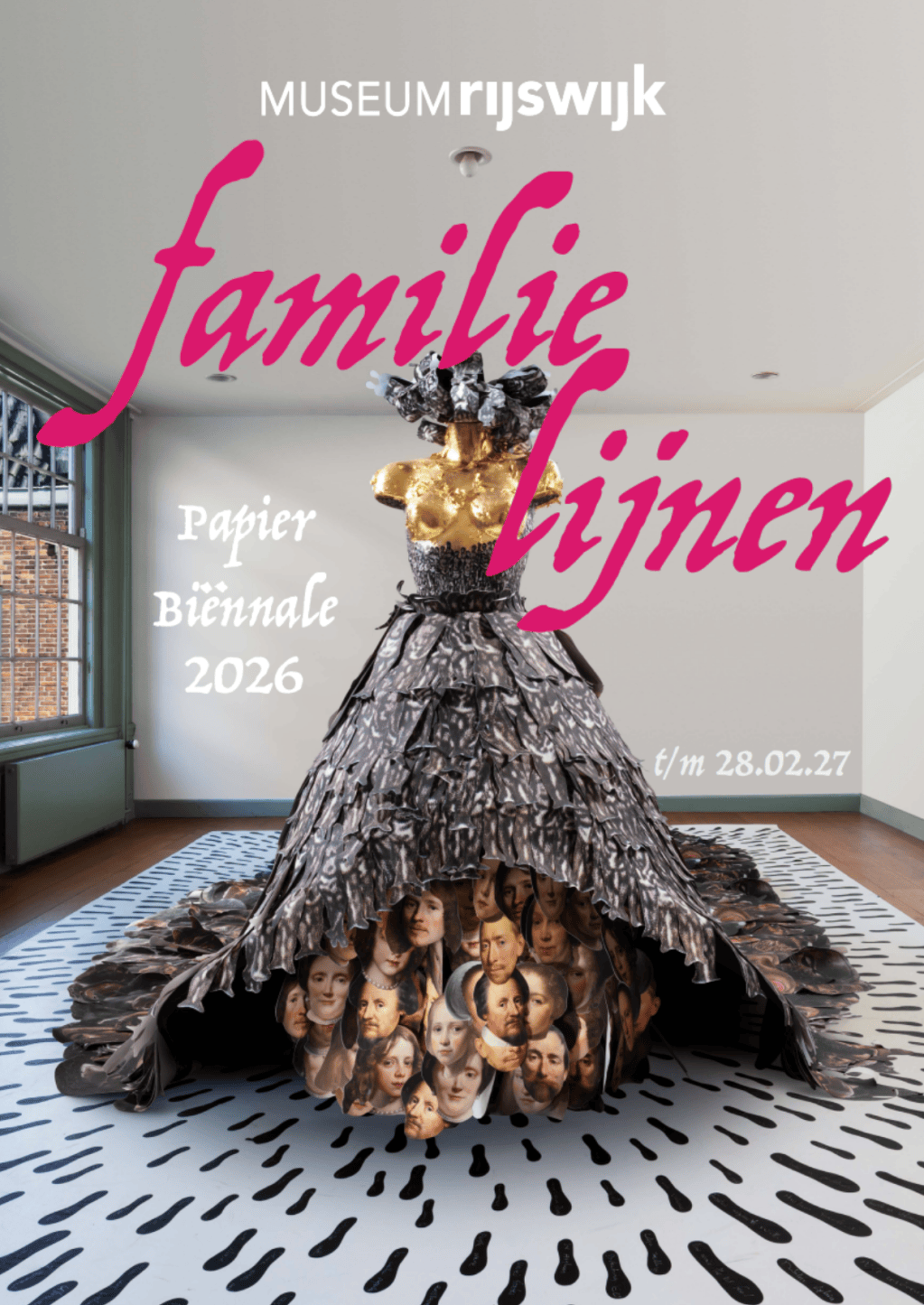
Museum Rijswijk, 20 September 2026 – 28 February 2027
The Papier Biënnale celebrates its 30th anniversary this year with Familielijnen (Family Lines). Twenty artists from different cultural backgrounds present their perspectives on family dynamics and stories through paper collages, sculptures and installations made of coloured, cut, shaped and shredded paper. The exhibition is curated by Julia Geerlings.
What defines a family, and how is our image of family changing today? Each artist expresses themselves in paper: as the carrier of a story, a protective shell or a ritual material.
Family lines can be followed endlessly by anyone, back in time or forward into the future, through a family tree on paper or through spiritual contact with ancestors. The dynamics within families are both unique and universal, so the exhibition will resonate with every visitor. The artists respond to personal stories, social tendencies and the shared human need for connection. Where one reflects on visible relationships and behaviours, others search for what family can also be, filling what they themselves have missed. Across the works, the artists touch on family lines in many forms, from biological and social relationships to practices of care.
Paper in the leading role
Through the medium of paper, the twenty artists give shape to their stories. Installations of painted cardboard, (moving) papier-mâché sculptures, wall-filling paper cuts, (ritually) burned works, sculptures of manipulated paper, records of folding techniques, hand-made works of pineapple fibre and print techniques together convey the complexity of different family lines. Together they explore how it was and is, and how it could be.
Generations, care and connection
Three themes emerge from the stories the artists tell: generations, caring for one another, and chosen connection.
Generations. From generation to generation, habits, patterns and expectations are passed on, broken or repaired. For Karolina Hyun Wilting, traditional Korean paper cutting forms a ritual connection with the afterlife. Her cut-out shapes are passages where memories, spirituality and ancestors meet.
Caring for one another. The family is above all the domain of care: parents caring for children, and the other way round, in shifting roles fulfilled with varying success. Marie Ilse Bourlanges brings to light the forgotten story of her German grandmother Ilse, who spent the last decades of her life in a psychiatric clinic. Her medical file was carefully destroyed, as if her life had been erased. Through her work, Bourlanges explores possibilities for healing this intergenerational trauma.
Chosen connection. Today many people find themselves far from where they were born, by circumstance or by choice, and create their own family. Shared history, values and habits are not only found in families but also among kindred spirits. Pris Roos felt a strong sense of coming home with fellow artist Yin Yin Wong: both grew up in families that ran their own toko and restaurant, both chose to become artists, and both shared their coming out. Roos recreated in cardboard the kitchen where they met, as a tribute to the connection they found.
The opening
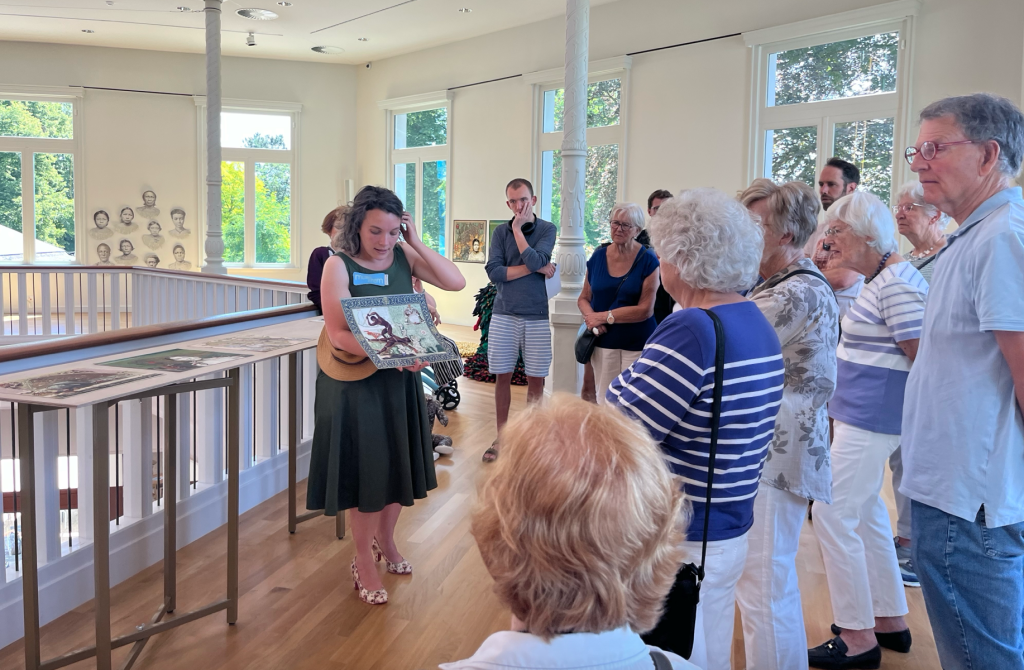
The exhibition opened on Sunday 20 September 2026 in the Oude Kerk opposite the museum, with a welcome by director Emma van Proosdij and a conversation on family lines between curator Julia Geerlings and several of the artists, followed by a visit to the exhibition.
Participating artists
Amy Suo Wu, Britt Dorenbosch, Efrat Zehavi, Erik Tlaseca, Karen Sargsyan, Karina Beumer, Karolina Hyun Wilting, Maksud Ali Mondal, Marie Ilse Bourlanges, Matea Bakula, Narges Mohammadi, Philipp Gufler, Pris Roos, Raul Balai, Samboleap Tol, Sithabile Mlotshwa, Thierry Oussou, Toon Fibbe, Yin Yin Wong and Yubin Lee.